

What’s Next? Rethinking Investment in the Ghanaian Literary Scene
Lizz Johnson
In 2022, for PEN Transmissions, I wrote an article titled Ghana and the Literary Industry. As I reflect on how quickly four years have passed—it is now January 2026—I find it necessary to return to that piece, to reconsider the points it raised and examine their relevance today. This reflection serves two purposes: first, to assess how those ideas still hold four years later, and second, to situate them within the central argument of this article.
The 2022 article explored the growth, challenges, and possibilities within Ghana’s contemporary literary landscape. It touched on several key points: (a) the abundance of talent, (b) the growth of the space through the rise of festivals and platforms—both digital and physical—and (c) the ways in which the local scene could grow through the right kinds of investment. Four years on, these observations remain strikingly relevant.
Between 2022 and 2026, the emergence of new platforms, events, festivals, and book clubs has only reinforced the argument that Ghana has no shortage of literary talent. More young literary enthusiasts are stepping forward—confident, ambitious, and eager to find their place within the ecosystem. There has also been notable growth in niche platforms, allowing people to identify genres they connect with and communities they belong to. This is meaningful progress and a sign that the scene is evolving more quickly than before.
However, alongside this growth is a quieter pattern worth interrogating: the number of platforms, festivals, and initiatives that have slowly faded away. In many cases, this has been due to a lack of direction—but more often, it has been due to the absence of sustained investment, both capital and human resource, needed to keep these initiatives alive.
This brings me to the central thesis of this article: rethinking investment in the Ghanaian literary scene.
For many years, and rightly so, conversations around investment have centred on capital. Literary organisations, practitioners, festivals, and platforms have depended heavily on financial input to bring ideas to life. And rightly so—what is an idea without the resources to sustain it? This reality partly explains the rise and fall of many initiatives over the past seven years. While capital is not the sole reason for this instability, it is certainly among the most significant.
In conversations with individuals who founded festivals, digital platforms, or events that eventually ceased, two recurring issues emerged: the lack of steady, long-term funding, and the relocation of key people involved in these projects. The latter is hardly surprising. In 2024, research by migrationpolicy.org reported that there were approximately 2.5 million immigrants from Sub-Saharan Africa living in the United States. Ghana accounted for 8.9% of this figure—making it the third highest in Africa, behind Nigeria and Ethiopia, and the second highest in West Africa. This translates to a higher percentage of Ghanaians moving from the continent into America alone between 2020 and 2024. Europe has also seen significant migration from Ghana, particularly to countries such as Germany, Switzerland, and the UK in the past four years as well.
This movement contributes to brain drain and the loss of human resources needed to sustain long-term cultural projects. Combined with inconsistent funding, it becomes clear why many literary initiatives struggle to survive beyond their early years. These challenges are not unique to Ghana; they are global issues within the literary and creative industries more broadly. It is within this context that the concept of the Orange Economy has gained traction—advocating for greater economic recognition of creative industries. Another mentioned reason—going back to the question—was the lack of direction and a total burnout which led to a pause, as individuals focused on their well-being and regaining energy to make a comeback. But in an economy where only a few can survive on their work in the creative sector, it really exposes how a focus on survival means a low return to projects unless grants or funding comes in.
So how do we rethink investment in Ghana’s literary scene?
While much has already been said about capital funding, rethinking investment requires shifting the focus beyond money alone. The Ghanaian literary space faces a specific structural challenge that must be addressed.
A closer look at the scene reveals that many of the platforms, festivals, and events that have emerged in recent years are initiatives started by writers and poets or spoken word artists themselves. This is not unique to Ghana or Africa, but it is more prevalent here due to the limited availability of existing structures. These individuals often feel a responsibility to create opportunities they did not have—or that were extremely limited—when they were emerging. Similar patterns can be observed in film, visual art, and fashion.
While this commitment is admirable and vital to community building, it comes at a cost. Writers and poets are forced to split their time between creating work and creating platforms. Both require discipline, energy, and sustained attention, and inevitably one begins to suffer. In many cases, it is the writing itself. Some practitioners manage to publish occasionally, but only a few are able to pursue their craft to its fullest potential. This is not to downplay their achievements, but rather to question what might be possible if their time and energy were focused solely on their creative work. For many, a side occupation to generate income becomes necessary, further limiting creative capacity.
This is where rethinking investment becomes critical. The literary ecosystem needs more literary producers, journalists, curators, moderators, and organisers—roles that support writers rather than compete with their time.
A second issue worth addressing is the monotony of emerging practitioner roles. This has nothing to do with sameness in style or voice, but rather with the narrow range of roles that emerging talents feel they can occupy. Most want to be writers, poets, or spoken word artists taking centre stage. While Ghana has an abundance of talent, this raises an important question: is there too much talent with too few places to go? With the current limitations of the industry, how do all these practitioners fit into the existing space?
These questions lead us back to the core inquiry: What’s next?
A creative industry thrives when its ecosystem is close to complete—when all parts work together in a way that supports creation, circulation, and sustainability. There is no true “end point” in creativity; it is cyclical. A functional ecosystem means that alongside talented writers, poets, and spoken word artists, there are professionals managing, refining, distributing, and amplifying their work.
Ghana’s literary scene does not lack talent. What it lacks are the human resources and infrastructure required for long-term growth.
This article focuses particularly on human resources as a way of rethinking investment. What Ghana needs are individuals interested in working across publishing, festivals, events, and training. The industry needs editors to fine-tune written work, coaches to guide performers, agents to sell manuscripts, marketers to push literary works, and more publishing houses dedicated to literary production be it audio books, written work and even adaptation of works for stage. There is also a growing need for book reviewers (a growing part of the industry) , event producers, literary and cultural influencers, adaptation managers, translators, and literary illustrators.
Expanding these roles would allow the sector to move beyond its current limitations. The possibilities for literary work—and its extensions into film, audio, education, and digital media—are vast. This expansion directly strengthens Ghana’s position within the Orange Economy and creates pathways for sustainable capital generation, allowing grants and international collaborations to complement, rather than prop up, the industry.
Ideally, writers, poets, and spoken word artists should be able to focus on their craft, reaching their full potential, while producers, curators, and festival organisers focus on building platforms that bring work closer to audiences. From experience, curating a literary exhibition and producing festivals demands a creative outlet on its own dedicated to research, inquiry, testing and creating for an audience to enjoy. This division of labour reduces burnout and prevents the loss of talent to exhaustion.
So what is next, really?
As the industry continues to evolve, I hope to see more practitioners stepping into specific, specialised roles that expand the ecosystem. Rethinking investment means moving away from a passion-led culture toward system-led investment—one that provides structure, continuity, and longevity. To move forward meaningfully, more research, data collection, and sector mapping are needed to identify immediate priorities and long-term strategies and most important identify immediate roles needed to push the scene. I would say it's about time editors and agents become a known occupation within the scene and with the movement of media more literary digital creators, event producers, journalists and critics would do us some good. This would help shift the literary scene away from dependence on one-off grants and external funding.
Local and government investment are crucial to this conversation, but that discussion stands on its own. For now, the case is clear: the future of Ghana’s literary scene depends not only on how much we invest, but what—and who—we choose to invest in.
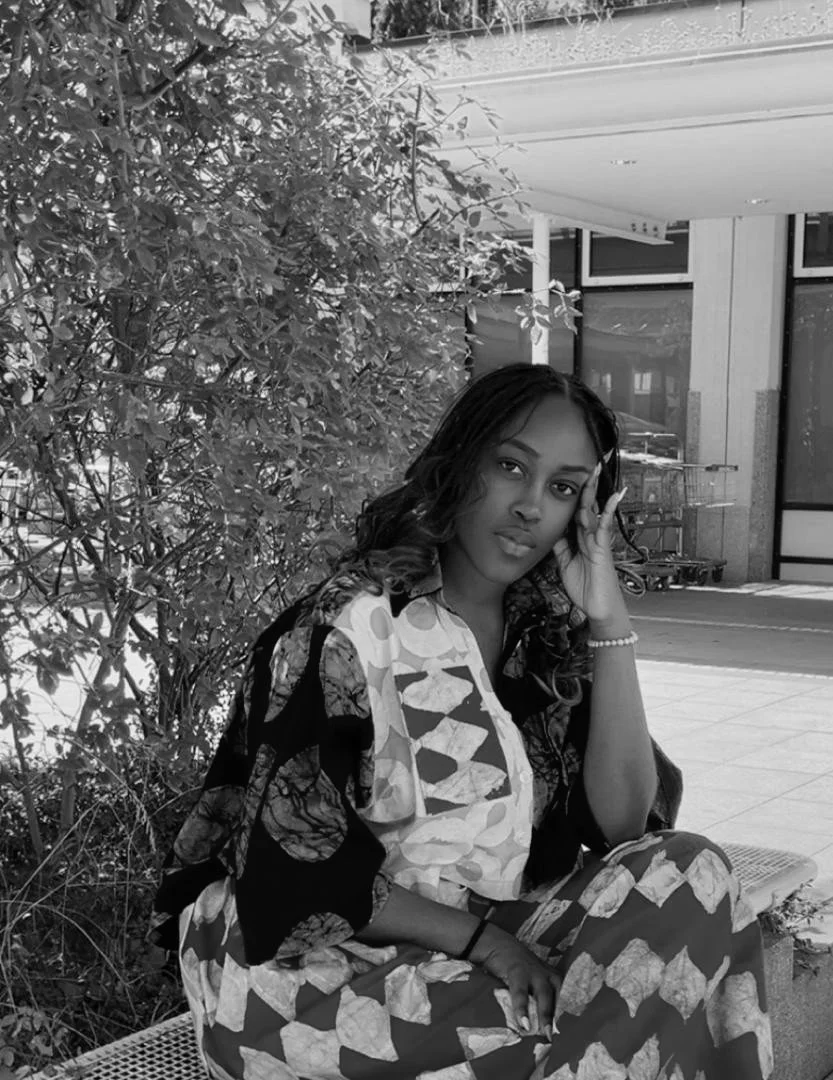
LIZZ JOHNSON is a cultural curator, writer, and researcher working at the intersection of literature, popular culture, and critical cultural studies. She has worked with several international organisations to produce publications, events, retreats, festivals, and workshops. Her works have also featured in several publications both digital and print. She is the founder of The Fihankra Review and currently works as the Cultural Programs Officer at the Goethe-Institut in Accra.