

What We Lost While We Sang the Anthem
Adwoah Nyarkoa
The road to Ahenkuro had narrowed since he last walked it, not in width, but in memory. The trees that once shaded the path were gone, their stumps flattened beneath layers of ochre dust and regret. The trotro that had ferried Kojo from the capital spat him out at the edge of the town like an unclaimed load, and drove off in a trail of diesel and indifference.
He stood there for a while, just breathing in the dry, cracked scent of earth and charcoal smoke. Ahenkuro had not waited for him. Its corrugated roofs sagged like tired backs. Walls that once bore slogans of independence and unity were now plastered with funeral posters, their edges curling under the sun. REST IN PEACE, OSEI BOATENG (1932–1984), one read, above a photo of a man Kojo had once taught to sing the national anthem. He was just a boy then. So was Kojo.
Clutching his weathered leather bag, Kojo stepped forward, his boots leaving shallow prints in the dust. His gait had changed; slower, heavier not from age, but from carrying too many names he dared not say aloud. The carved walking stick in his right hand clicked against the ground in a soft rhythm, as though tapping out the syllables of a forgotten chant.
At the entrance to the market, a few women sat behind neat mounds of tomatoes and kontomire, their faces hidden beneath wide straw hats. One of them looked up as he passed. Her eyes narrowed.
“Kojo Mensah?” she asked, her voice as dry as roasted corn husk.
He turned, heart nudging his ribs. “Yes,” he said simply.
The woman spat beside her wares. “We thought you died in Tanzania.”
Kojo offered no reply. There were no words that would fit neatly between tomatoes and contempt.
He moved on.
Children watched him from behind wooden stalls, whispering in twos and threes. One boy, no older than ten, pointed.
“That’s the one they say betrayed Kwame,” the child said, loud enough for the breeze to carry.
Kojo froze. Not at the accusation, but at the name Kwame. It struck him like the sound of a gun not fired, but remembered. He hadn't heard it spoken aloud in thirty years, not since the day he fled with the truth caught in his throat like a bone.
The post office building, once painted in bright red and gold, now stood cracked and pale like something that had tried too long to stand proud. At the junction near the Methodist chapel, the statue of the old chief, Nana Obuobi, leaned slightly to one side. Kojo touched the rim of his hat, a silent salute to a man who’d once called him son of fire.
At the end of the lane stood a house with faded blue shutters and a sagging veranda. The compound was empty, save for a rusted coal pot and a calabash bowl turned upside down like someone had given up mid-meal. He stopped there. The house was once his father’s. And then, for a time, his.
He opened the gate. It creaked like an old mourner and stepped inside. Nothing had changed. And yet, everything had. Inside, the air was thick with the scent of dry wood, dust, and the faint scent of old shea butter. He sat on the edge of the wooden bed, removed his hat, and placed the walking stick beside him. Outside, someone shouted. A child laughed. A radio crackled with static and then blared a voice:
“…And in today’s headlines: government denies any arrests of student protestors in Accra. Meanwhile, shortages continue in Makola…”
Kojo closed his eyes. Ghana was speaking again but he didn’t know if he still understood the language. In the darkness behind his lids, Kwame's face appeared, the last memory of him alive. Smiling. Trusting. Kojo opened his eyes slowly. He had returned. But the home he came back to was not the one he left.
It never was.
That night, sleep came in pieces. Not like a soft cloth drawn over the body, but in broken, frayed patches. Kojo lay on his back, watching the ceiling as the fan creaked slowly overhead, its wooden blades stirring the heat just enough to remind him he was still alive.
A bat flitted past the open window. Somewhere in the distance, a goat cried, then silence fell again. In the dark, memories crept in slow, sure-footed, uninvited and his mind rushed back to the past.
Kumasi, 1957.
They were boys in borrowed boots, lungs full of slogans, hearts drunk on freedom. Kojo and Kwame inseparable, wild, defiant. At the rally grounds, they stood shoulder to shoulder, chanting for self-rule, for the flag that had not yet been sewn. They were firebrands the kind who wrote letters to the Evening News. The kind who painted slogans on colonial walls at midnight, who believed that revolution began with the sound of truth shouted loud enough to shatter windows.
Kojo remembered how Kwame laughed wide-mouthed and deep-bellied, the kind of laugh that made others smile without knowing why.
“When Ghana rises, we rise with her,” Kwame once said, pressing a clenched fist to his chest. “When she fails, we build her again. That is the covenant.”
Kojo had believed him.
Accra, 1966.
The flag still flew, but the wind had changed. Rumours of betrayal within the Party. Names whispered at night. One morning, the sound of boots on campus. The next, the quiet disappearance of their comrades. Kwame was on the run. Kojo, already marked, was taken from his hostel and driven blindfolded to a cold room with one flickering bulb and the smell of wet rope. They asked questions. They offered threats. They pulled out files. When none of that worked, they brought out the iron rod and the barrel of water.
“Where is Kwame?”
He said nothing. Not the first day. Not the second. By the third, pain blurred the edges of his resolve. They didn’t need much. A town name. A time. A route. What he gave them felt like nothing just air, just weakness whispered between clenched teeth. But it was enough. By the end of the week, Kwame was dead.
Present Day
Kojo turned over in bed, eyes burning. He had never said the name aloud since. Not to the Party e;xiles who whispered over tea and exile pensions. Not to Adzo’s mother, Afua, the nurse who’d once washed his broken ribs with silence and married him out of pity. He had left Ghana not because of danger, but because he could not look it in the eye.
The next morning, he went to the riverside. Ahenkuro’s river had shrunk since he was a boy. The water, once proud and laughing over stones, now trickled weakly between banks choked with weeds. But the rocks were still there smooth, grey, sacred. He knelt and washed his hands in silence.
A woman passed with a bucket balanced on her head. She glanced at him and paused.
“You Kojo Mensah?”. He nodded.
She looked him over and said nothing more. Just turned, adjusted the cloth around her waist, and walked on. Her silence was louder than insult. Kojo remained kneeling, fingers in the water, eyes staring at the ripples that refused to settle.
“Forgiveness,” he whispered, not to anyone present. “You’ve become harder to find than freedom.”
A leaf floated past, unbothered.
At the edge of the riverbank, he saw the old tree where he and Kwame once carved their initials. The trunk was thicker now, bark rough and tired. But the letters faint, shallow, scarred were still there.
K.K + K.M.
Time had not erased them completely. He reached out to touch the marks, but stopped short. His hand hovered. Then fell to his side. Some histories were too tired to be touched again.
Back at the house, he opened his suitcase and took out a folded piece of paper. A photo. Faded at the edges. Kwame stood in the middle, grinning in a crumpled white shirt. Kojo stood beside him, lean, serious, still believing the world could be argued into justice. Behind them, the black star of Ghana fluttered on a rough wooden pole. Kojo turned the photo over.
“One day, we will tell this story ourselves.” K.K.
He sighed and slid the photo back into his shirt pocket. He would tell it, yes. But not the way Kwame had meant.
The knock on the door came just as Kojo was lighting a candle. Three slow taps. Then silence. He paused, then opened. She stood there like a shadow etched in stone; tall, lean, and still-faced. The same nose as Afua. The same eyes too, though colder now, sharper. The resemblance hit him like a slap. Time hadn't robbed her of it.
"Adzo," he said.
She didn’t reply. Her gaze roamed the room the cracked walls, the bare table, the open suitcase on the bed. Then her eyes returned to him.
“I heard you’re back,” she said flatly. “The market speaks louder than the radio these days.”
Kojo stepped aside. "Come in, if you wish."
She didn’t move. “I didn’t come to sit.”
He nodded slowly and leaned on his walking stick.
"You look like your mother."
"She died without hearing from you once. No letter. Not a single message.” Her voice didn’t rise, but it scraped.
“I know,” he said.
“Do you?” she asked, almost amused. “Do you know what it was like watching her cough blood and whisper your name as if it were a prayer or a poison?”
Kojo looked down. "I never stopped thinking of her."
"That’s the problem. You only thought."
Silence ballooned between them. The candle flickered. A gust of wind slipped through the shutters, unsettling a paper on the table. Kojo motioned to the bench by the door. “Sit. Please.”
She hesitated, then lowered herself slowly, but her spine never touched the backrest. He took the seat across from her, resting both hands on the walking stick, as if steadying the weight of more than his bones. “I don’t expect forgiveness,” he said. “Not from you. Not from anyone. I only wanted to return and see…”
“What exactly?” she cut in. “The ruins? The memories? The house you left behind, like a grave?”
Her voice cracked, not from emotion, but exhaustion. The kind only a child of absence can carry. He looked at her more closely now. Her dress was neat but faded. Her hands bore chalk stains and rough skin a teacher’s hands. She was no one’s weakling.
"You're teaching?" he asked gently.
"At the basic school. If you can call it that. No chalk, no books, desks with termites. But they come. Every morning. Hungry, hopeful." She paused. "Someone has to stay." Kojo’s throat tightened.
"Your mother always wanted that for you. To teach. To serve."
Adzo tilted her head. “You speak as if you served too.”
He flinched.
She caught it and said nothing. Later, after she left, he sat outside on the veranda. The sky was bruised with twilight, and the moon rose like a scab over Ahenkuro’s broken rooftops. A boy passed with a radio tied to his shoulder by a string. Highlife music floated through the air, followed by a news bulletin:
“Authorities deny reports of university students being arrested. Civil society groups urge calm. Meanwhile, state-backed companies continue layoffs…”
Kojo shut his eyes. They used to fight for the truth. Now, they denied it into microphones and called it leadership.
The next morning, he walked to the drinking spot down the road the one where the old men gathered like smoke. He sat in the corner and ordered palm wine. The men glanced at him. One of them, a rotund man with a belly like a drum, squinted.
“Ei. Is that not Kojo Mensah?”
“It is,” another replied. “Come back from hiding, eh?”
They chuckled, not kindly. Someone leaned forward. “You hear about Captain Kwabena? He owns half the cocoa depot now. Got a new Benz. They say his son dey school in London.”
Kojo sipped slowly. Captain Kwabena. Once, they had dug trenches together outside Ho rebels building dreams with their bare hands. Now, the man dined with generals. "Even traitors become chiefs, if they live long enough," someone muttered. Kojo left before the cup was empty. That night, the Queen Mother sent word.
"Come. I have been waiting since the day you crossed the border."
He tucked his walking stick under his arm and went. The house was quiet, lit by kerosene lamp. On the wall, portraits of chiefs stared down like silent judges. She sat in a rattan chair, wrapped in cloth and wisdom, her eyes sharper than fire.
“Kojo Mensah,” she said. “You return like the wind that no longer knows the path it once swept.”
He bowed slightly. “Nana.”
“You seek to belong again. But you bring nothing but bones.” Kojo swallowed.
“I want to remember the good,” he said. “But the bad keeps rising.”
The Queen Mother studied him, then pointed to the chair beside her.
“Sit. Speak your shame. Not for me. But for the land.”
Kojo sat.
“I gave them Kwame.” He said it so softly it almost vanished.
“They beat me. Starved me. Burned my thigh. I held out. But on the third night… I spoke. One word. A location. That’s all they needed. The next day, he was dead.”
The Queen Mother said nothing for a long while. Then: “You did not betray the land, Kojo. You betrayed a brother. And that is the harder wound to clean.”
As she poured libation into the earth beside her chair, she whispered, “The land may forget. But the blood remembers.”
***
The next day, Adzo returned. Uninvited, unsmiling, unreadable. She stood in the doorway again, but her hands were clenched this time, fists trembling ever so slightly.
“I heard what you told the Queen Mother,” she said.
Kojo, sitting by the window, did not rise. He looked at her the way one looks at a tide, knowing resistance is useless.
“I didn’t want you to hear it like that,” he said quietly.
Adzo stepped in, closed the door behind her. Her voice cracked, not from tears, but from the pressure of holding them back.
“You gave him up. My uncle.”
He nodded once. Slowly. She crossed the room in three strides and stood over him.
“And then you ran? You disappeared. Left us to grieve a ghost, not a body. Left my mother to raise me on prayers and salt. Do you know what that does to a child knowing her father exists but choosing exile over explanation?”
“I wasn’t choosing exile,” he said. “I was choosing… silence. Because I thought I didn’t deserve a voice anymore.”
She laughed bitterly. “And yet here you are. Speaking again.”
Kojo sighed, eyes fixed on the window shutters. Outside, the trees shivered in the late afternoon wind.
“I hear your cousin’s been arrested,” he said softly. “Kwame’s son.”
Adzo stiffened. “They took him three nights ago. The same way they took his father. No charge. No warning. He was mobilizing students to protest food shortages.”
“And the others?”
“They’re too afraid. Some have gone quiet. The few that still speak may not last the month.”
Kojo turned to face her. “You believe they’ll kill him?”
She nodded. “Or break him. And he won’t be the last.”
Kojo sat back, bones aching beneath his skin.
“How long,” he whispered, “can a country kill its children before it forgets how to raise them?”
Adzo didn’t answer. She dropped a folded note on the table.
"This has the name of a man in Accra who can help. He’s quiet, but connected. If you want to redeem yourself, start there."
Kojo picked up the paper and looked at it. The name meant nothing to him, but the gesture did.
She turned to leave. At the door, she paused.
“I don’t forgive you,” she said. “And I don’t know if I ever will.”
He didn’t look away. “I don’t expect you to.”
“But I see now that silence is your inheritance,” she said. “And I’m tired of inheriting it.”
Then she was gone. That night, Kojo dreamt of water. He stood knee-deep in the Ahenkuro River, holding a basket filled with stones. Every time he tried to lift it, the current pulled harder. On the opposite bank, Kwame stood in white, arms folded, watching him.
“You should have carried me,” Kwame said in the dream. “Not just my guilt.”
Kojo woke soaked in sweat, heart racing. Outside, a cock crowed.
Dawn.
Later that morning, he visited the old school grounds. Most of the buildings had collapsed, their roofs eaten by rust and termites. But the flagpole still stood crooked, chipped, but upright. At its base, weeds had grown thick. He reached into his pocket and pulled out the photo, the one of him and Kwame, the Black Star flag fluttering behind them. He bent, cleared the grass with his hands, and buried the photo beneath the soil.
“Rest,” he said.
He made one more stop to the Queen Mother’s compound. She sat under the shade of a mango tree, shelling groundnuts.
"You look lighter," she said, not glancing up.
"I buried our memory today," Kojo replied.
“Did it resist?” she asked. He smiled faintly. “It let me go.” She looked at him now, truly looked.
“Then perhaps the land is willing to listen again.”
Kojo hesitated. “Nana, do you believe redemption exists?”
The Queen Mother cracked another shell.
“No,” she said. “But truth does. And that’s harder to kill.”
Before he left, she handed him a small, leather-wrapped bundle. Inside was a strip of cloth red, green, black, and gold and a small carved token.
“What is this?” he asked.
She replied, “Kwame left it behind before they took him. Said to give it to the one who returns without excuse.”
Kojo looked at the token it was shaped like a broken chain link. He wept, not with sound, but with breath sharp and shuddering. As he walked back through the town, people watched him. This time, the whispers were quieter. Not forgiving. Not welcoming. But curious. And that was enough.
Kojo stood at the roadside, watching schoolchildren pass in mismatched uniforms, sandals half-broken, their lunch bowls clanging like tired drums. Some carried tattered exercise books under their arms. Others had none at all. One girl tripped and fell. No one stopped. Not even her teacher. He stepped forward, helped her up. She thanked him softly, eyes wide with confusion, and ran to catch up. He turned and faced the town square.
It had changed not in structure, but in soul. Where once stood monuments to freedom fighters, now rose signboards for betting shops, foreign mobile companies, and posters of smiling politicians who looked nothing like the people they governed.
A loudspeaker from a nearby kiosk blared a preacher’s voice:
“Your suffering is not from bad leadership. It is from disobedience to God! Pray harder, suffer better!”
The crowd responded with amens. Kojo stepped away.
At the cocoa depot, he saw Captain Kwabena step out of a black Mercedes. Two bodyguards followed. The man’s gut had grown like his ambition. He wore sunglasses and gold chains. A child of the revolution turned king of convenience.
“Kojo!” Kwabena called, feigning warmth. “Still breathing, I see.”
Kojo did not return the smile. “You’re doing well.”
Kwabena laughed. “Hard work pays. You should’ve stayed. The country’s been good to those who knew how to bend.”
“Is that what we fought for?” Kojo asked.
Kwabena shrugged. “We fought to win. What we do after the victory is survival. Besides, even the white man had to bend before he ruled us. Now we call him for help again.”
“You’re proud of that?” Kojo said, voice tight. “Why not? We need aid. Loans. Foreign partners. China, the UK, America. Who cares where salvation comes from?”
Kojo looked away. Kwabena leaned closer.
“You still believe in that old Ghana? The one Nkrumah dreamed up? That ghost died long ago, my brother. You either build with the living or join the dead.” He walked off, laughing.
Kojo sat on a wooden bench outside a kenkey seller’s stall. An old man nearby was mumbling to himself.
“We be free but still dey beg. We get flag, but no food. We get name, but no sense. We free, we free but white man still dey write our story.”
Kojo leaned in. “You remember when we fought for this country?”
The old man squinted. “You one of them old fighters?”
“Yes.”
The man snorted. “Then fight again. This time, with truth. With voice. Or die and let those who are hungry speak for you.”
That night, Kojo sat by candlelight and opened his notebook. He began to write.
Not poetry. Not essays. Just facts. Names of those who betrayed the revolution. Truths about those executed without trial. His own confession the night he gave up Kwame. The list of youth being arrested now, just like then.
He titled it: “What We Lost While We Sang the Anthem.”
He read the pages aloud his voice low, steady, reclaiming the language of his fight.
Later, he met Adzo by the riverbank. She stood watching the water, arms folded. “I saw Kwabena today,” he said. She didn’t look at him. “How many houses does he own now?” “Too many.” Silence.
“Do you know what hurts?” Kojo asked.
She waited.
“I thought independence would make us whole. That we’d write our own stories, build schools, grow pride instead of poverty. But we’ve traded British chains for local collars. The names changed, but the weight stayed.”
Adzo looked at him now. “So what will you do?”
He handed her a folded sheet his testimony.
“I’m going to read it on radio. Let the country know what we buried.”
“You think they’ll listen?”
“No,” he said. “But someone will hear. And maybe they’ll fight smarter than we did.”
At dawn, the air over the town was cool, but dry, the kind of morning that held the memory of old harmattan winds, without their bite. Kojo sat on the veranda of the radio station, clutching a worn folder to his chest. His hands trembled slightly, not from fear, but from the weight of years.
Inside, the producer glanced up. “Are you ready, sir?”
Kojo nodded.
As he walked into the booth, he passed a young man barely twenty, headphones on, scrolling through his phone. He didn’t even look up. Kojo smiled bitterly. We fought for them, he thought. But they no longer remember our names.
The microphone was old, but clear. The red recording light blinked on. Kojo cleared his throat.
“My name is Kojo Mensah. I was twenty-five when I went into the bush with Kwame to fight for Ghana’s independence. I returned thirty years later, and I can’t recognize the land we bled for.”
His voice was steady, but inside, his chest burned.
“We dreamt of a Ghana that would speak with its own voice, think with its own mind, and stand on its own feet. We wanted a country free not just in name, but in soul. But today, we are still begging the very hands that once shackled us. Our leaders sit and wait for the white man to speak before they move. We bow in suits, we praise foreign investors, we sell our land, our gold, our water even our thoughts.”
He paused, his breath catching.
“And when I came home, a home I had missed every single day the people I left behind remembered only that I survived, not what I survived through. They remembered that I spoke of Kwame’s capture. Not that I did so under torture, when my fingernails were gone, my ribs cracked, and death had already kissed my neck.”
“You blame me for choosing life. But I chose to live to tell the truth, even if it took thirty years.”
“And what hurts me most is not that I am blamed. It is the people now blaming me. The same ones who have destroyed everything Kwame and I fought for. You mock the fight. You ignore the freedom. You kneel again, smiling, to be owned not by chains, but by contracts.”
The producer behind the glass was frozen, wide-eyed. Kojo went on.
“This is not the Ghana we fought for. This is a shadow. A dressed-up ghost. You rejected the price we paid, and now you accept a cheaper version of everything.”
He leaned closer.
“But someone somewhere will hear this. Maybe a young girl in a village. Maybe a teacher in a broken classroom. Maybe even the son of a betrayer, wondering if another way is possible. To them, I say, don’t forget. Don’t let history be written only by those who profit from silence.”
“We lost many things. But if we can still speak truth, even when no one listens, then maybe, just maybe we have not lost everything.”
He ended there. The silence that followed was full.
That evening, Kojo walked through town again. The streets had not changed, but something in him had. A few people turned to look at him now some with curiosity, some with scorn. He heard whispers.
“That’s the one who betrayed his friend…”
“That’s the one talking on radio like he’s still important…”
But one old woman a market woman with ash on her feet stepped in his path. She touched her chest.
“Yeda wo ase. Thank you. My son is in jail for writing truth. Today, I feel less alone.”
Kojo bowed his head. He would leave the next day. Not to run, but to write more, to speak more, to resist in the way age allows, through truth, not bullets. And though he felt betrayed by the country he had loved, he also felt a flicker of stubborn hope. Maybe freedom didn’t come all at once. Maybe it came again and again each time someone refused to lie.
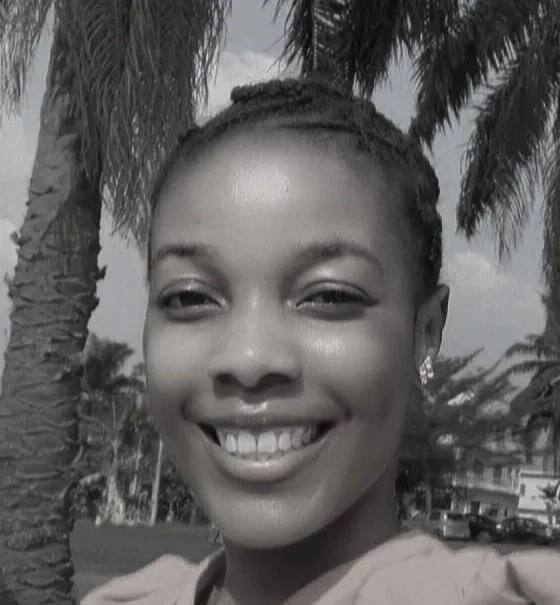
ADWOAH NYARKOA is a Ghanaian writer whose work explores identity, womanhood, grief, and political consciousness. Her fiction and essays have appeared in Kalahari Review, Writers Space Africa, Ta Adesa, Global Writers Project and Tales and Whispers. She has been featured twice in Kalahari Review, with a third feature forthcoming, and has an upcoming publication with Brittle Paper. She was featured in the October 2025 breast cancer Anthology by the She writers Club. In 2025, she was longlisted for the African Human Rights Movement Poetry Contest.