

The Weight of the Rod
Farida Eleshin
The bulala always made a whistling sound before it bit into my skin. It was a thin, wicked hiss that preceded the sting.
“Spare the rod and spoil the child,” Mma would grunt with every stroke, her face set in a mask of righteous discipline. She wasn't just beating me; she was saving me. That is what the Mallam next door told her. He said a parent without a rod was a parent without a soul. So, for every spilled bowl of soup, or every minute I was late coming home from school, I paid in increments of five. Five lashes. Five marks of love.
Teacher Yakubu loved me the same way. At school, if my feet crossed the threshold after the bell, his cane was already waiting. It was a world of circles—the circle of the village, the circle of the belt, the circle of the rod.
One afternoon, I followed Mma to the new neighbour’s house. I sat in the shadows of the porch, nibbling on a piece of fried yam, while Mma whispered with Auntie Yaa. They were watching Serwaa, Auntie Yaa’s daughter, scrub a blackened pot.
“She’s becoming stubborn,” Auntie Yaa sighed, testing the weight of a switch in her hand.
“Don’t let the seed of rebellion grow,” Mma advised, her voice thick with borrowed wisdom. “Spare the rod, Yaa, spoil the child.”
I watched Auntie Yaa lead Serwaa behind the house. I heard the rhythm of lashes. I didn't say a word. I knew the rules. If I spoke, akakaduro would be next. Mma had done it once before. The burning in my anus had been so sharp I couldn't sit for three days, a fire that no water could put out. I stayed silent. I was part of the secret now.
A few days later, Serwaa and I caught little Baaba. She was crouched behind a water butt, her face smeared with palm oil, clutching a piece of goat meat she’d fished from her mother’s pot. We were older. We knew the law of the rod better than she did.
We didn't hesitate. We took the meat from her trembling hands and ate it ourselves—a tax for her sin. Then, we found a switch.
“Spare the rod and spoil the child, Baaba,” I said, mimicking Mma’s low, serious tone. We lashed her until she cried, feeling a strange, hollow power in our chests. We weren't just children anymore; we were disciplinarians.
The cycle broke on a Tuesday night.
Baba had just returned from Zebilla, his skin coated in the fine yellow dust of the long journey. Mma greeted him at the door with a basin of water and a practiced lie. She told him all about her day—how she had spent the afternoon at my school, sitting with Teacher Yakubu to discuss my progress.
I stood in the corner, watching her. I smelled the air around her. It didn't smell like the chalk and dry earth of the schoolyard. It smelled of raw beef and the butcher’s heavy, musky cologne.
I knew that smell. She went there every time the dust of Baba’s truck disappeared over the horizon.
“Mma is lying, Baba,” I said. The words felt like cool water in my mouth.
The room went deathly still. Mma’s hand froze over the basin.
“What?” Baba asked, his voice low and dangerous.
“She wasn't at the school. She was at the butcher’s house. She lies on his bed while you are away.”
The silence that followed was heavier than any rod. Mma turned to me, her eyes wide with a terrified, murderous heat. I saw her hand twitch, reaching for the place where she kept the bulala. She wanted to silence me. She wanted to burn the truth out of me with ginger and wood.
I didn't flinch. I looked at her, at the woman who had taught me that pain was the only way to stay on the path of God.
“Spare the rod and spoil the child, Mma,” I said softly.
Baba stood up slowly, his face darkening like a storm cloud, and reached for the buckle of his belt. I watched the truth hit Mma harder than any lash could.
I walked out of the room.
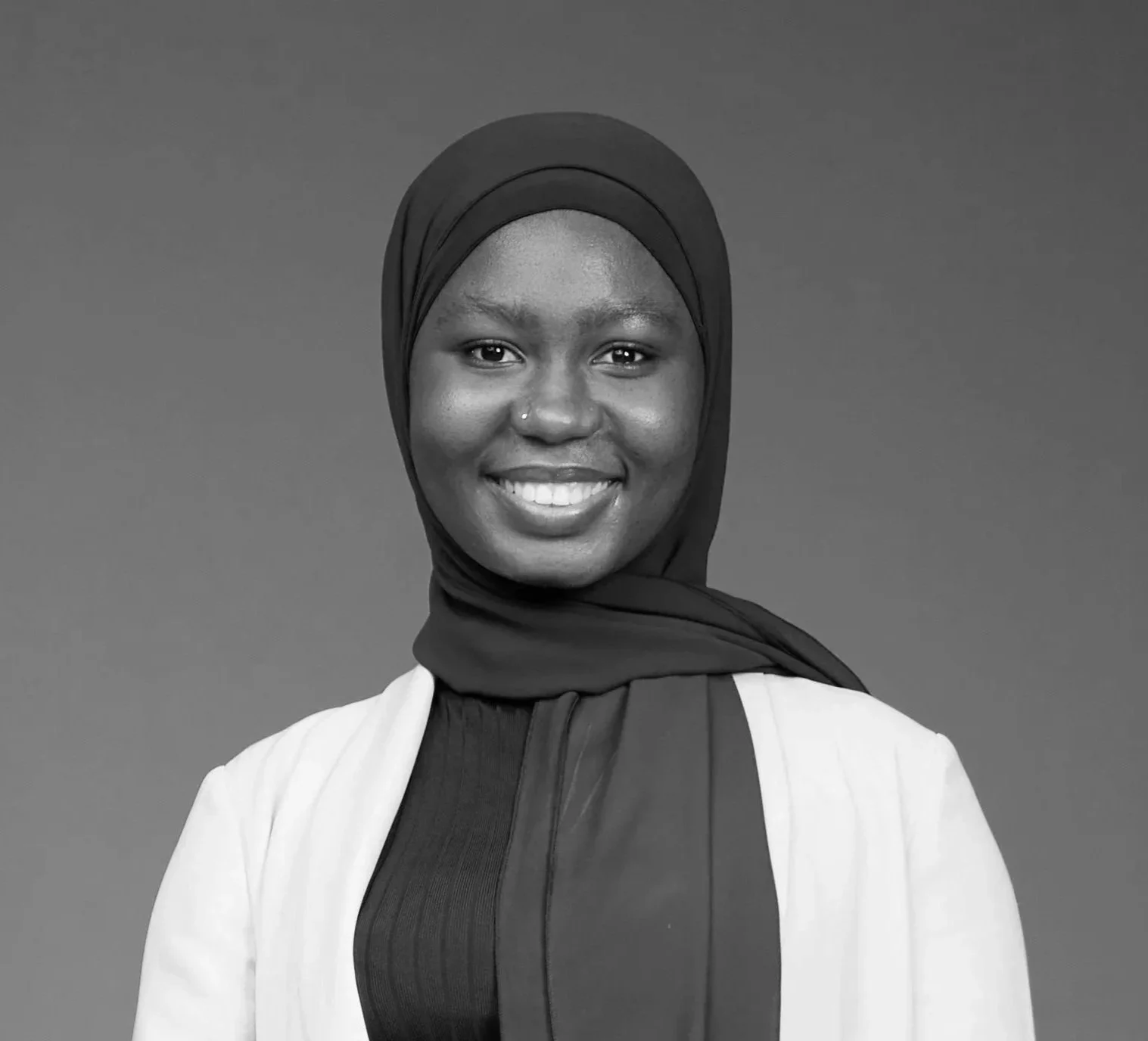
FARIDA ELESHIN is a writer whose work moves between lyrical fiction, Ghanaian culture, and the everyday textures of Ghanaian life. Drawing from her Hausa and Yoruba heritage, she crafts stories that resonate with readers and create nostalgic, cathartic moments – small openings where memory and feeling meet on the page. Her work treats language and heritage as living material, carrying the rhythms of home into new forms. She is currently a PhD student at the University of North Carolina at Charlotte, after earning her master's degree from Carnegie Mellon University and her bachelor's from Ashesi University, where she studied Computer Science.