

Accra is a Character
Kobby Ankomah-Graham
I often hear it said that Ghanaians do not read. As someone who has taught and works in communication, I don’t find this entirely true. Ghanaians do read - especially religious texts and self-help books promising paths to money - but I’m not sure that we enjoy reading. I see this as part of colonial legacy: reading is often something assigned, rather than something done for pleasure. You can see this in some of our bookstores. For every Vidya Books – wonderfully stacked with literary classics, old and new – there are three Kingdom Books, where profitable textbooks sit alongside stationery and a whole lot of office furniture.
I remember a famous Nigerian author speaking in one of her just-as-famous TED Talks about how she wrote her earliest stories with references to un-Nigerian things like snow. She had to learn it was okay to write about her own context. I wonder whether more of us would enjoy reading if we saw ourselves – and our cities – reflected in our stories. Whether we write about them or not, our cities read us back.
For anyone paying attention, Accra feels like a character in a book. Consider how people describe this place, using words like “friendly,” “safe,” and, whispered behind closed doors, “greedy.” Walk Accra’s streets long enough, and you will acquire a sense of narrative, whether you open a book or not. To adult here is to understand that life rarely comes with tidy resolutions, and happy endings are often reserved for a privileged few.
I first realized that cities could be characters while studying A-level literature in London, after five years of O-levels at Mfantsipim School in Cape Coast. Everyone has that one teacher who shapes them more than others. Mine was Mrs. Mugadzaweta: an Irish woman married to a Zimbabwean, who insisted on teaching us the most culturally expansive texts on the British syllabus.
One of those texts was Toni Morrison’s Jazz. Harlem is alive in that book: its moods, desires, and moral weight shaping every movement of its human characters. Mrs. Mugadzaweta taught me that when Morrison writes things like, “And the City, in its own way, gets down for you, cooperates, smoothing its sidewalks, correcting its curbstones, offering you melons and green apples on the corner…” she is describing a place with agency. Harlem moves, nudges, tempts, punishes, and guides its people’s rhythms. Later, N.K. Jemisin’s The City We Became showed me cities that fight, suffer, strategize, and defend themselves too. Urban life, in both cases, intervenes in human affairs.
Once you start seeing cities this way, you cannot unread Accra. Since taking over from Cape Coast as the Gold Coast’s capital in 1877, the city has seen a lot. Its streets contain chapters, and there are plot points waiting for you at every turn and trotro station. The density of urban life here makes moral and narrative awareness unavoidable, and a young writer walking these streets will develop an eye for improvisation and digression long before opening a book. Noisy as fuck, Accra forces you to listen. It rewards those who pay attention, weaving its stories through all your senses.
The air humid, smelling of exhaust fumes and someone cooking an aromatic stew; hawkers calling over one another for attention; a funeral procession moving in one direction while a corporate team in matching T-shirts jogs the other way; a car with a loudspeaker drives slowly past, flogging a product that promises to cure your constipation and solve your sexual ailments too. A single afternoon here can contain enough micro-drama for multiple stories: market stall negotiations, minor altercations between passers-by, night-time church services colliding with rush hour horns. Each interaction is a plot point and a lesson. In a few hundred meters, you can witness a full spectrum of human attention, cooperation, conflict, and improvisation; an education in urban rhythm hard to replicate in a classroom. Even in the absence of dramatic events, the city shapes us. We internalize its logic early. Our every neighbourhood becomes a microcosm of human behaviour. The complexity and unpredictability of urban life are instinctive. Narrative and city are inseparable.
Ghanaian literature formalizes what the streets teach intuitively. Across genres, Ghana’s cities, towns, and villages emerge as active, layered forces, shaping moral choices, ethical attention, and the texture of everyday life. In Ayi Kwei Armah’s The Beautyful Ones Are Not Yet Born, Accra is relentless and corrupting; its filth, decay, bureaucracy, and traffic testing integrity and patience. Ama Ata Aidoo’s Changes: A Love Story and Amma Darko’s Faceless show streets, workplaces, and neighbourhoods structuring ambition, intimacy, and compromise, while Ayesha Haruna Attah, Taiye Selasi, and Nii Ayikwei Parkes embed smells, sounds, and rhythms directly into character experience. In Edem Dotse’s seminal flash fiction piece Airtel Five, a roadside transaction unfolds against honks, hurried steps, and shouted prices, making the city fully present in a handful of lines. In flash fiction, where space is sparse, the city emerges through micro-gestures, dictating urgency and shaping the ethics of the tale.
Nonfiction works like Ato Quayson’s Oxford Street treat Osu as a text, where sidewalks, shops, and pedestrian flows archive history, migration, commerce, and improvisation. I was once the editor of a magazine called DUST, which was basically an ode to Accra. We chose the title as something that unifies, since dust is a substance that can be found “from the bottom of a poor person’s feet to the top shelf in a penthouse suite.” Through the simple act of documenting the culture, creativity and social consciousness that we saw brewing in Accra in the early 2010s, we ended up with a snapshot of the beginnings of Accra’s rise to the global cultural importance it holds today. In my 2019 essay, Care is a New Cool, I attempted to explain some of the city’s contradictions by naming multiple overlapping “Accras” - Party Accra, Holy Accra, Hustler Accra, Poor Accra, Expat Accra, Elite Accra - each one a social ecosystem with its own moral register.
I often think about Spintex Road when reflecting on urban rhythm. My family has lived on Spintex since 1986, back when it was just a dangerous, untarred road running parallel to the Tema Motorway, leading to the Johnson Wax factory. Around the corner from my family’s house, the city orchestrates its own theatre: rush hour traffic groans, horns shriek, a motorcycle clips past a pedestrian, and a policeman is too busy extorting a taxi driver to intervene. Life here accumulates like stories, layer upon layer.
Pre-boom Spintex was a sparse industrial corridor, untarred and dangerous. Directions to our house were “drive on that road from Tetteh Quarshie, keep looking right until you see a roof, then go there.” There was no electricity the day we moved in, and I was bitten by a grass snake that first night, surrounded as we were surrounded by bushes and scrub. Today, it sprawls with residential blocks, Palace Mall glinting nearby, Flowerpot Junction a gateway to a place once called Martey Tsuru but since rebranded as East Airport. In every intersection, turn, and pause, the road teaches improvisation, observation, and negotiation; urban micro-dramas reveal human ambition, compromise, and endurance. Spintex writes itself, a living narrative of migration, entrepreneurship, and history, reminding me that the city’s stories are inseparable from our own.
Spintex doesn’t announce itself, but its chaos and constant reshaping - traffic, migration, entrepreneurship – write their own story. It reminds me of the origin stories of some of Ghana’s other cities. Like my hometown, Koforidua, where a man called Kofi Fori is said to have once built a home beneath a big tree (“Kofi Fori ni dua”) that attracted so many tired travellers that some put down roots there and settled. Or stories of how the Asante decided on their capital by planting seeds for a Kum tree in two locations, one of which died (Kumawu) and the other of which flourished to become Kumasi, the seat of the kingdom.
An intimate familiarity with cities informs the memoir I have been working on since 2020; Everyone You Love Will Leave. Each chapter begins with a city and a year: London 1977, Cape Coast 1987, Accra 2005 – the places my late brother and I lived most of our lives. The city-year labels began as a suggestion from a writerly friend, who said they would immediately ground readers in time and space. The book tries to make light work of heavy themes like masculinity, memory, grief, and mental health, and each of these demanded orientation through place. Pairing city with year helps me make sense of a narrative sprawled across several decades and continents.
One chapter begins:
Cape Coast. 1987.
Despite its sleepy veneer, Cape Coast made good on its promise of adventure.
Another:
Accra, April 2020.
The call came on a Saturday. While my son watched cartoons, my wife and I were trying to keep calm in the face of growing global dread. Throughout Ghana, we were all huddled in our houses, confusing our slightest cough for impending death.
This insistence on place is not new or unusual. Wakanda is almost as famous as the Black Panther himself. Stephen King’s fictional Maine towns, like Derry and Castle Rock, recur across his novels, turning geography into a shared literary universe comparable to the Marvel Cinematic Universe. Spike Lee’s Brooklyn functions similarly on screen, shaping plot, character, and stakes. We recognize these worlds as coherent because they are named, returned to, and allowed to accumulate meaning.
Aben wo ha: I see opportunity here. Ghanaian writers rarely build recurring urban universes. Accra, Kumasi, Salaga, and Cape Coast appear, shaping stories, but seldom return as familiar anchors across works. I wonder whether our hesitation to push past the literary foundations laid for us comes from modesty, postcolonial shame, or a literary culture still negotiating how to claim its urban voice.
Honouring cities in literary work is an act of attention and inheritance. It affirms a city’s existence, its moral weight, and its capacity to shape consciousness. It may even invite accountability. Reading the city as a character requires empathy, thoughtfulness, and honesty. Without these, writing is shallow. With them, the streets become collaborators. If we pay attention, we see that stories are never just on the page: they are lived, accumulated, and woven into the very streets around us.
Accra’s lessons are sometimes indirect, hiding between the lines of why a hawker is forced to balance water sachets on her head in afternoon heat; why we can’t seem to get rid of plastics; who gets to cut through traffic and who doesn’t; why pavements and public spaces are so scarce. Each ordinary act is a story waiting to be unpacked to help describe a character waiting to be written.
Accra will endure whether we write or not. Its streets, neighbourhoods, and markets are alive with histories, ambitions, compromises, and improvisations, teaching those willing to notice. The cities in which I was raised – London, Cape Coast, Accra – have shaped my writing, my ethics, and my sense of what narrative can hold. Learning to read them, observing their rhythms, internalizing their ethics, and translating them into narrative have been a lifelong education. My memoir, essays, and stories are responses to these teachings.
I hope that the next generation of Ghanaian writers embraces this practice. Reading cities closely is both literary strategy and engagement. They reward those who notice, teaching as surely as Aidoo, Morrison, or Jemisin do on the page. Accra’s tales are already written into our lives. We must simply learn to value them.
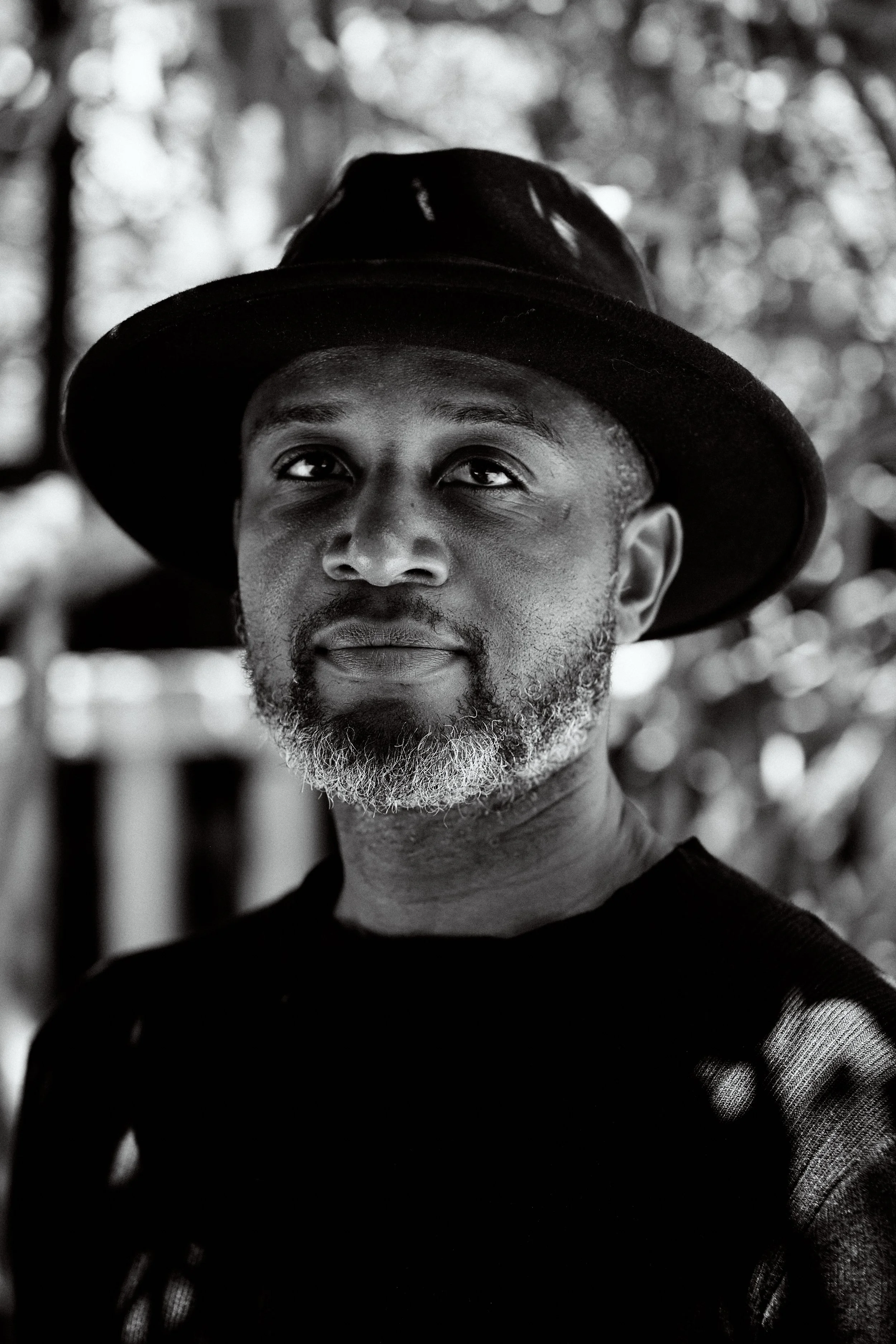
KOBBY ANKOMAH-GRAHAM is an Accra-based writer, cultural strategist, DJ, and doctoral candidate. His writing explores African music, culture, and subcultures, and he has bylines in Aperture, Kinfolk, The Guardian, Litro, and The Africa Report. In 2020, he was awarded the Miles Morland African Writing Scholarship, and in early 2025, he delivered a three-part lecture series at Stanford University on Afrobeats and politics, reflecting his deep engagement with music’s role in shaping African identity. Kobby has also been profiled by the BBC and Global Voices. His ongoing doctoral research, The Other Cool: Care Ethics & Alté(rnative) Culture in the Age of Afrobeats, examines how musicians in Accra’s alternative music scenes demonstrate community care and social engagement. http://kobbygraham.com